
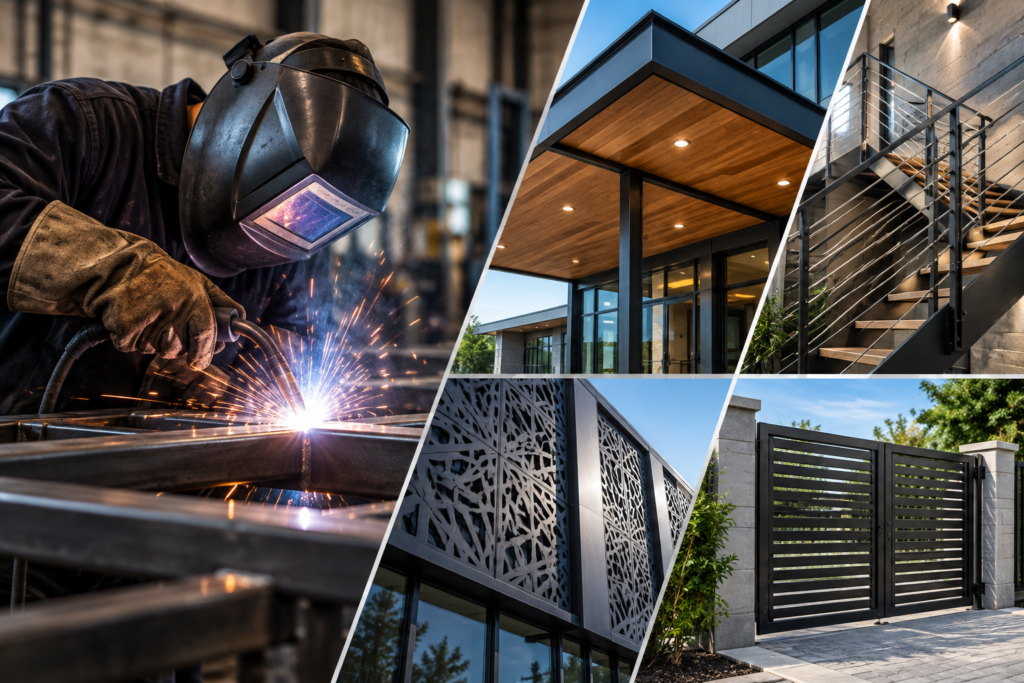
Architectural metal fabrication is the process of designing, shaping, joining, finishing, and installing metal components for buildings and outdoor spaces. It combines fabrication skills with architectural design, so the finished work must fit accurately, perform properly, and look intentional. Examples include railings, gates, screens, canopies, and signage. NAAMM describes architectural metal products as including custom and decorative metalwork such as railings, grilles, stairs, and ornamental elements used in building construction. Unlike mass-produced components, fabricated pieces are made for a property, opening, elevation, or concept.
How Does Architectural Metal Fabrication Work?
The process usually begins with a design requirement. An architect, designer, contractor, property owner, or fabricator defines what the component needs to do, how it should look, and where the fabricator will install it. Before fabrication begins, the team reviews dimensions, materials, connections, finishes, and site conditions. The fabricator may then cut, drill, bend, roll, form, weld, grind, polish, or mechanically assemble the metal. The exact process changes with the project; a sheet-metal screen has different needs from a curved railing or entrance gate.
Finishing and installation are also critical. Exterior steel may need a suitable coating system, while exposed stainless steel may require a consistent finish. Professional fabrication also requires safe shop practices. OSHA identifies welding and cutting hazards including fumes, ultraviolet radiation, burns, eye injuries, and electrical shock, reinforcing the importance of trained workers and proper procedures.
Why Is Metal Fabrication Design Important?
Good metal fabrication design connects appearance with buildability. A concept may look impressive in a rendering, but the fabricator still has to determine how to make, transport, anchor, and install it. Joint locations, material thickness, bend radii, drainage, fastening methods, and tolerances can influence both performance and appearance. Visible architectural work is especially unforgiving because uneven gaps, awkward transitions, exposed fasteners, or rough finishing are easy to notice. Thinking through these details early helps create metalwork that feels intentional rather than improvised on site.
Where Is Architectural Metal Fabrication Used?
Architectural fabrication appears in residential, commercial, hospitality, institutional, and public projects, especially when standard products cannot match required dimensions, performance, or visual character. Custom fabrication gives designers and owners more control over proportions, materials, patterns, finishes, and how metal components connect with surrounding construction.
Residential Metalwork
Homes commonly use fabricated metal for driveway gates, pedestrian gates, stair railings, privacy screens, decorative panels, handrails, and exterior features. A balcony railing is a strong example because it must complement the architecture while serving an important protective function. Its dimensions, anchorage, spacing, materials, and finish should suit the project and applicable local requirements. Residential custom metalworks can create continuity by repeating related patterns across gates, railings, screens, and interior details.
Commercial and Hospitality Spaces
Restaurants, hotels, offices, retail stores, and mixed-use properties use architectural metalwork for entrances, partitions, stair railings, branded features, façade accents, canopies, and speciality installations. In these spaces, appearance and durability often matter equally. A restaurant may choose dark steel screens for an industrial character, while a hotel may use brushed stainless steel or bronze-toned details for a more refined look. The best results come from selecting metal, form, and finish based on the space’s identity and daily use.
Outdoor Signage and Entrance Features
Outdoor signage is another practical use of architectural fabrication. Metal can form sign frames, monument structures, entrance markers, dimensional elements, decorative supports, and branded architectural features. Because these installations face weather exposure, materials and finishes should suit the environment. Scale matters too. A sign that looks balanced on a screen may appear undersized at a large commercial entrance, so consider proportions, visibility, mounting, lighting, and surrounding architecture before fabrication.
What Are Common Types of Custom Metalworks?
Custom metalworks can range from small decorative details to large architectural assemblies. Typical projects include gates, balcony railing systems, handrails, privacy screens, decorative wall panels, canopies, pergolas, sign structures, façade accents, and ornamental features. NAAMM’s Architectural Metal Products division covers railing systems and miscellaneous and ornamental metal products for building construction, reflecting the field’s variety. Custom fabrication is useful when dimensions are unusual, a distinctive pattern is needed, or several features should share one design language. Custom does not have to mean complicated; clean geometry and carefully controlled proportions often create the strongest result.
Which Materials Are Used for Architectural Metalwork?
No single metal is best for every project. Carbon steel is versatile and suitable for many fabricated forms. Stainless steel is often chosen when corrosion resistance and a clean appearance matter, while aluminium can be useful when lower weight and corrosion resistance are priorities. Bronze and brass can create a warmer, more decorative finish. Choose the right option based on the environment, appearance, maintenance needs, fabrication requirements, and budget. For exterior work, pay close attention to weather exposure and coating performance.
What Should You Look for in a Metal Fabricator?
Start with relevant experience. A fabricator who has completed comparable railings, gates, screens, or signs is more likely to understand the practical challenges involved. Review visible welds, alignment, transitions, finishes, and installation quality rather than distant portfolio photos. Ask how the company handles measurements, drawings, material selection, finish specifications, site conditions, and installation. Where structural or life-safety requirements apply, architects, engineers, fabricators, and other appropriate design professionals should coordinate the work and ensure it complies with applicable codes and project specifications.
Communication also matters. Good coordination with builders, architects, engineers, and other trades can prevent expensive changes after fabrication begins.
Why Choose Custom Fabrication Over Standard Products?
The biggest advantage is control. Custom fabrication lets a component match a project’s exact dimensions and design intent, rather than forcing the building to accept a limited catalogue option. It also provides more flexibility in material, pattern, proportion, connection style, and finish. Standard products suit straightforward needs, but architectural metal fabrication works better when fit, appearance, durability, or site coordination requires a tailored solution.
Final Thoughts
Architectural metal fabrication combines design and skilled manufacturing to create purpose-built features for buildings and landscapes. From custom gates and balcony railings to privacy screens and outdoor signage, fabricated metal can meet practical needs while reinforcing architectural character. Strong results depend on thoughtful metal fabrication design, suitable materials, accurate production, finishing, and careful installation.
FAQs
What is architectural metal fabrication?
It is the custom production of metal components for buildings and designed spaces, including cutting, forming, welding, finishing, and installing items such as railings, gates, screens, and signage.
Can architectural metal fabrication be used for balcony railings?
Yes. A custom balcony railing can be designed around a building’s style and site conditions, while its dimensions, anchorage, and safety details must meet applicable project and code requirements.
What metals are commonly used for custom metalworks?
Steel, stainless steel, aluminum, bronze, and brass are common choices. The best option depends on exposure, appearance, maintenance expectations, fabrication requirements, and budget.
Is architectural metal fabrication suitable for outdoor signage?
Yes. Fabrication can be used for outdoor signage, monument structures, entrance markers, dimensional elements, frames, and decorative supports designed for exterior conditions.
What is the role of metal fabrication design?
Metal fabrication design turns an architectural idea into something practical to manufacture and install by considering dimensions, materials, joints, connections, finishes, tolerances, and site conditions.